The Sobriety Blahs: Why You Don't Feel Happy Yet (And Why That's Completely Normal)
Jun 03, 2026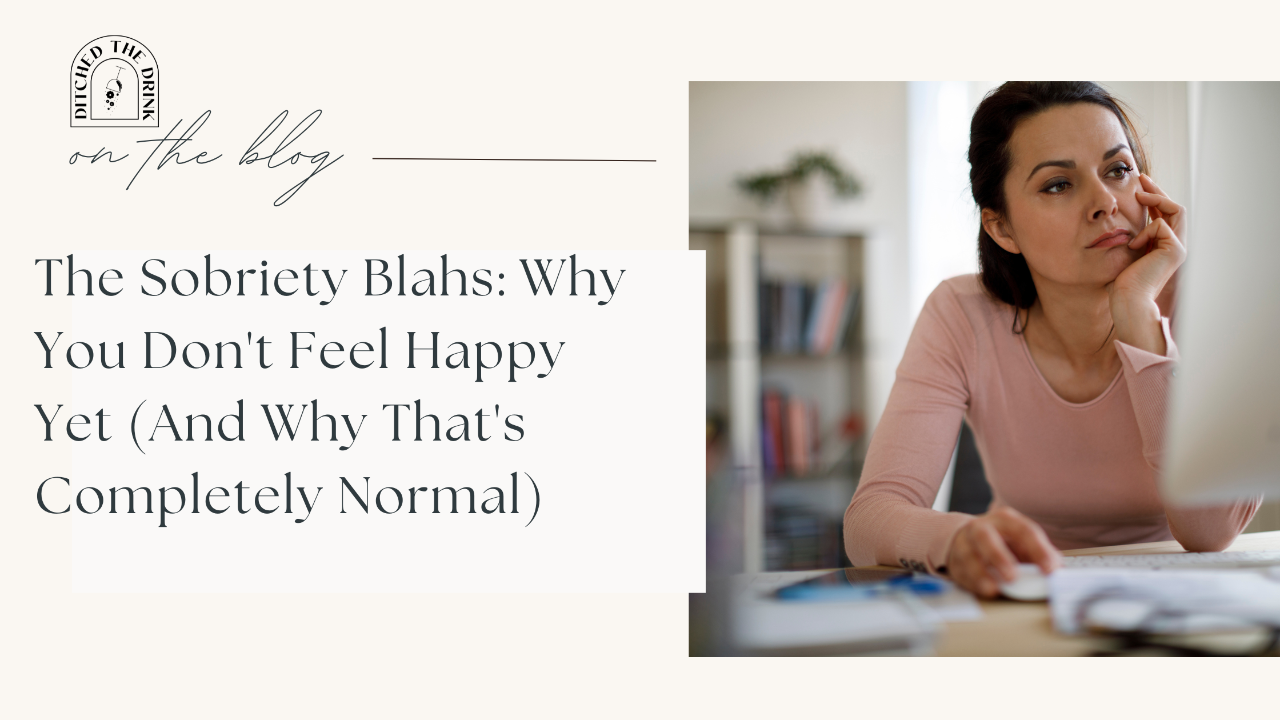
You quit drinking.
Maybe you're sleeping better. Your anxiety has improved. You're saving money and making healthier choices.
But there's one thing nobody warned you about.
You don't necessarily feel happy.
In fact, you might feel surprisingly flat.
Life feels a little dull. Motivation is hard to find. The excitement of early sobriety has faded, but the joy and freedom you expected haven't fully arrived.
If you've ever wondered, "Shouldn't I feel better by now?" you're not alone.
What you're experiencing may be something called anhedonia, often referred to as "the sobriety blahs."
As a sober coach and someone who completed Yale University's Certificate in the Science of Well-Being, I want you to know that this experience is both common and understandable. More importantly, it's usually temporary.
What Are the Sobriety Blahs?
Anhedonia is the reduced ability to experience pleasure from activities that once felt rewarding.
Things you used to enjoy may feel less exciting.
You might find yourself feeling emotionally muted, unmotivated, or disconnected.
Many people assume this means sobriety isn't working.
The truth is often the opposite.
These feelings can be a sign that your brain is actively healing.
What's Happening in Your Brain?
Alcohol creates powerful dopamine spikes in the brain.
Dopamine is often called the "motivation" or "reward" chemical because it helps us experience pleasure, anticipation, and satisfaction.
Over time, frequent alcohol use causes the brain to adapt. It becomes accustomed to receiving dopamine artificially and begins reducing its natural sensitivity to rewards.
When alcohol is removed, the brain's reward system doesn't immediately bounce back.
Instead, it enters a recalibration period.
This can leave ordinary life feeling underwhelming for a while.
A morning walk doesn't create the same rush.
A productive day doesn't feel as rewarding.
Even activities you genuinely enjoy can seem less satisfying than expected.
The important thing to remember is this:
Your brain is not broken. It is rebuilding.
The Emotional Side of Recovery
Recovery is about much more than removing alcohol.
It's also about learning how to experience life without using alcohol to change your emotional state.
For many women, drinking became a way to celebrate, relax, cope, socialize, reward themselves, or numb difficult emotions.
When alcohol is removed, those emotional patterns remain.
This can create a sense of emptiness that has less to do with alcohol itself and more to do with learning new ways to experience pleasure, comfort, connection, and joy.
This is one reason recovery often feels like personal growth work.
Because it is.
What Yale's Science of Happiness Research Taught Me
One of the most surprising lessons from Yale University's Science of Well-Being program is that humans are remarkably bad at predicting what will make us happy.
We tend to believe happiness lives somewhere in the future:
"I'll be happy when I lose weight."
"I'll be happy when I get promoted."
"I'll be happy when I finally quit drinking."
But research consistently shows that happiness is not a destination we arrive at.
It's something we cultivate through daily practices.
And those practices become especially important during the sobriety blahs.
How to Support Your Brain During This Phase
1. Celebrate Small Wins
When your reward system is healing, big achievements may not create the emotional payoff you're expecting.
This is why it's so important to acknowledge small victories.
Getting through a craving.
Going to bed alcohol-free.
Taking a walk.
Making a healthy meal.
Attending a meeting.
Reaching out for support.
Small wins teach your brain that effort leads to reward.
2. Move Your Body
Physical activity is one of the most effective natural ways to boost mood and support recovery.
You don't need intense workouts.
Walking, yoga, gardening, dancing, strength training, cleaning, or spending time outdoors all help regulate the nervous system and stimulate natural dopamine production.
Movement is medicine.
3. Prioritize Connection
Isolation often magnifies the sobriety blahs.
Humans are wired for connection.
Whether it's a sober community, a coach, trusted friends, or a support group, surrounding yourself with people who understand your experience can make an enormous difference.
Healing happens in connection.
Ready for support? Join the Insider Community and start building your happiest alcohol-free life.
4. Practice Happiness Habits
Research on well-being consistently points to a handful of activities that support long-term happiness:
- Gratitude
- Meaningful relationships
- Acts of kindness
- Time in nature
- Mindfulness
- Purpose-driven goals
- Physical activity
These habits may seem simple, but they have a profound impact on emotional well-being over time.
5. Give Yourself More Time
This may be the hardest advice of all.
Many women expect to feel dramatically different within weeks or months of quitting drinking.
While some do, many experience periods of emotional adjustment.
Recovery is not linear.
Brain healing takes time.
Your timeline does not need to look like anyone else's.
When to Seek Additional Support
While temporary emotional flatness is common in recovery, prolonged feelings of hopelessness, severe depression, or persistent inability to function deserve professional attention.
Sometimes symptoms that appear to be anhedonia are actually signs of clinical depression, anxiety, trauma, or another mental health concern.
Seeking support is not a sign of weakness.
It's a sign of wisdom.
A Final Word
If you're in the middle of the sobriety blahs, I want you to hear this:
You are not failing at sobriety.
You are not doing recovery wrong.
You are not destined to feel this way forever.
What feels like emptiness today may actually be healing happening beneath the surface.
Keep showing up.
Keep collecting small wins.
Keep practicing the habits that support your well-being.
One day you'll notice yourself laughing more, feeling more present, and genuinely enjoying moments that once seemed ordinary.
And you'll realize your brain was healing all along.
The goal isn't simply to stop drinking.
The goal is to build a life you don't want to escape from.
And that life is still being created.
If you're ready for support, accountability, and a community that truly understands, I'd love to welcome you inside.
Join the Insider Community today and discover how much easier—and more joyful—this journey can be when you don't do it alone.